Views: 0 Author: Site Editor Publish Time: 2025-09-22 Origin: Site


If you’ve ever seen a Pilates reformer, you probably thought it looked more like a medieval contraption than a workout tool. Springs, straps, bars, and a sliding platform—what do you even do with all that? Don’t worry, because once you understand the basics, the reformer becomes one of the most versatile and rewarding fitness machines you can use.
In this guide, we’ll break down how to use a Pilates reformer, from understanding its parts to performing your first exercises. Whether you’re brand-new to Pilates or looking to deepen your practice, this article will walk you through everything step by step.
Builds core strength and stability
Improves flexibility and balance
Enhances muscle tone with adjustable resistance
Reduces stress and encourages mindful breathing
Helps with injury recovery and rehabilitation
Before you start, it’s helpful to know the major parts of the reformer.
| Part | Function | Why It Matters |
|---|---|---|
| Sliding Carriage | Moves along rails when you push or pull | Lets you perform smooth, controlled movements |
| Springs | Provide adjustable resistance | Makes workouts harder or easier |
| Straps & Ropes | Add resistance for arms and legs | Expands exercise options |
| Foot Bar | Anchor point for hands or feet | Helps stabilize your body |
| Front/Standing Platform | Solid base near springs | Useful for balance and standing exercises |
| Shoulder Blocks | Keep you in place on carriage | Prevents sliding off during workouts |
| Headrest | Adjustable support for neck and head | Improves comfort and posture |
Once you understand each part, the machine becomes less intimidating and easier to use.
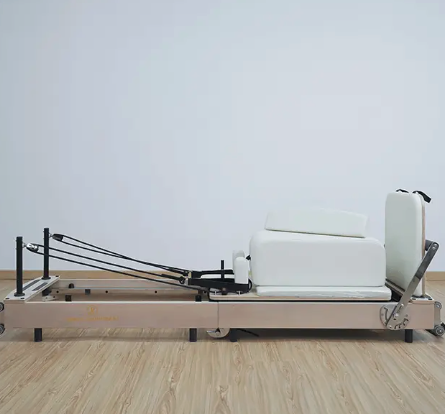
When setting up your Pilates reformer, the first step is to adjust the springs, which control the resistance you’ll experience during your workout. For beginners, it’s crucial to start with lighter settings to avoid straining your muscles. Most reformers come with color-coded springs, with lighter colors indicating lower resistance and darker colors representing higher resistance. Take a moment to familiarize yourself with the color scheme and choose the appropriate springs for your fitness level. Starting with a lower resistance allows you to get accustomed to the movements and build strength gradually.
Next, set the foot bar to a height that feels natural for your leg length. This adjustment is essential for maintaining proper alignment during your exercises. A well-adjusted foot bar ensures that your legs are in a comfortable and effective position, allowing you to perform movements with ease and precision. If the foot bar is set too high or too low, it can lead to discomfort and potential strain. Take a moment to find the optimal height for your legs, ensuring that your feet can press firmly against the foot bar without causing any unnecessary stress.
Finally, adjust the straps and headrest to ensure a comfortable and supportive setup. Make sure the straps are even in length, as this helps maintain balance and alignment throughout your workout. The headrest should provide adequate support for your neck without causing strain. Properly positioning the headrest ensures that your neck remains in a neutral position, reducing the risk of injury and enhancing your overall comfort. Take a moment to make these adjustments, as they play a significant role in your overall Pilates experience.
Pro tip: Always test the carriage before starting your workout. Gently push and pull it to see how the springs feel. This quick test helps you ensure that the resistance is appropriate and that everything is set up correctly for a smooth and safe workout.
To use a Pilates reformer safely and effectively, consider the following tips:
Loose clothing can get caught in the springs or straps, posing a safety risk. Opt for fitted clothing that allows for a full range of motion without any restrictions. This not only enhances your workout experience but also minimizes the chances of accidents. Fitted clothing ensures that you can move freely and comfortably, allowing you to focus on your form and technique.
Slipping can be a common issue during Pilates reformer workouts. To prevent this, either go barefoot or wear grip socks. These socks are specifically designed to provide excellent traction on the carriage, ensuring that your feet stay securely in place throughout your exercises. This added grip helps maintain your balance and reduces the risk of slipping, which can lead to injuries.
Maintaining proper posture is crucial in Pilates. Avoid using your spine to “cheat” during core exercises. Instead, engage your core muscles and focus on using your body’s natural strength to perform each movement. This not only enhances the effectiveness of your workout but also helps prevent injuries. Proper posture ensures that you engage the correct muscles and maintain a neutral spine, which is essential for a safe and effective Pilates practice.
Control is more important than speed when using a Pilates reformer. Take your time to perform each movement with precision and control. This approach ensures that you engage the correct muscles and avoid compensating with other parts of your body. Moving slowly allows you to focus on your form, ensuring that each movement is executed correctly and safely.
Inhaling and exhaling deeply helps engage your core and maintain proper form. Pay attention to your breathing throughout your workout. Deep, controlled breaths can enhance your overall performance and make your exercises more effective. Proper breathing not only helps you stay relaxed but also ensures that you maintain a steady rhythm, which is essential for a successful Pilates session.
Warming up your muscles before starting your Pilates reformer workout is essential. Stretching helps prepare your muscles for the upcoming movements, reducing the risk of injury. Warm muscles are more flexible and less prone to strain, allowing you to perform your exercises with ease and confidence. A proper warm-up sets the stage for a safe and effective workout, ensuring that you get the most out of your Pilates session.
Here are a few simple exercises to get started:
Lie on your back with feet on the foot bar
Push the carriage away slowly
Return with control
Reps: 10–12
Benefits: Strengthens legs, improves alignment, warms up muscles.
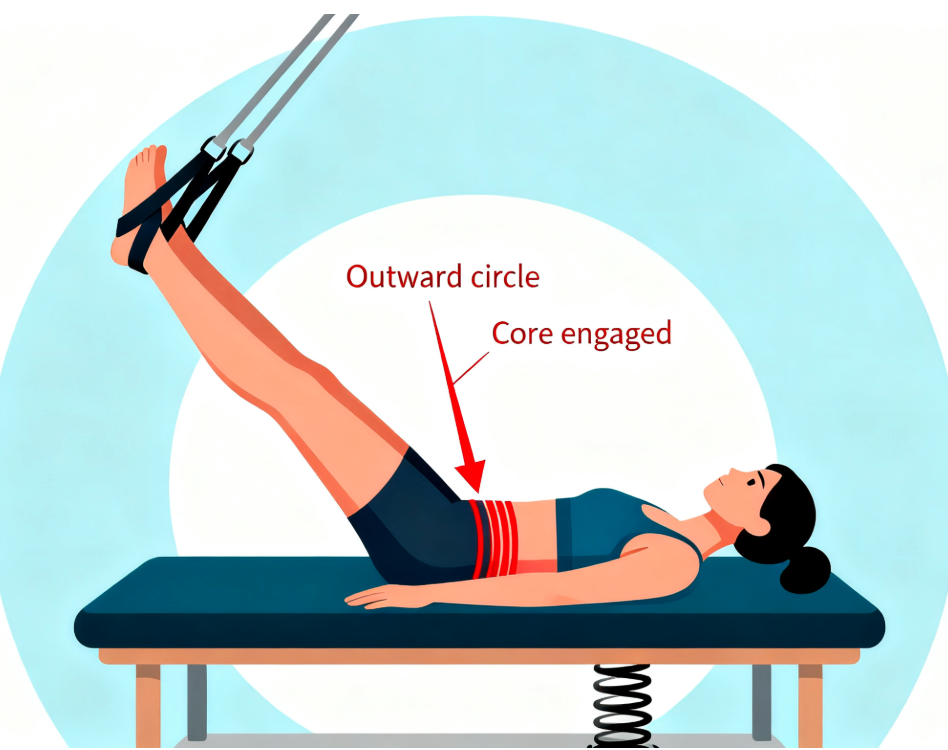
Lie on your back and place feet in straps
Draw controlled circles outward and inward
Keep core engaged
Reps: 6–8 each direction
Benefits: Improves hip mobility, strengthens core and thighs.
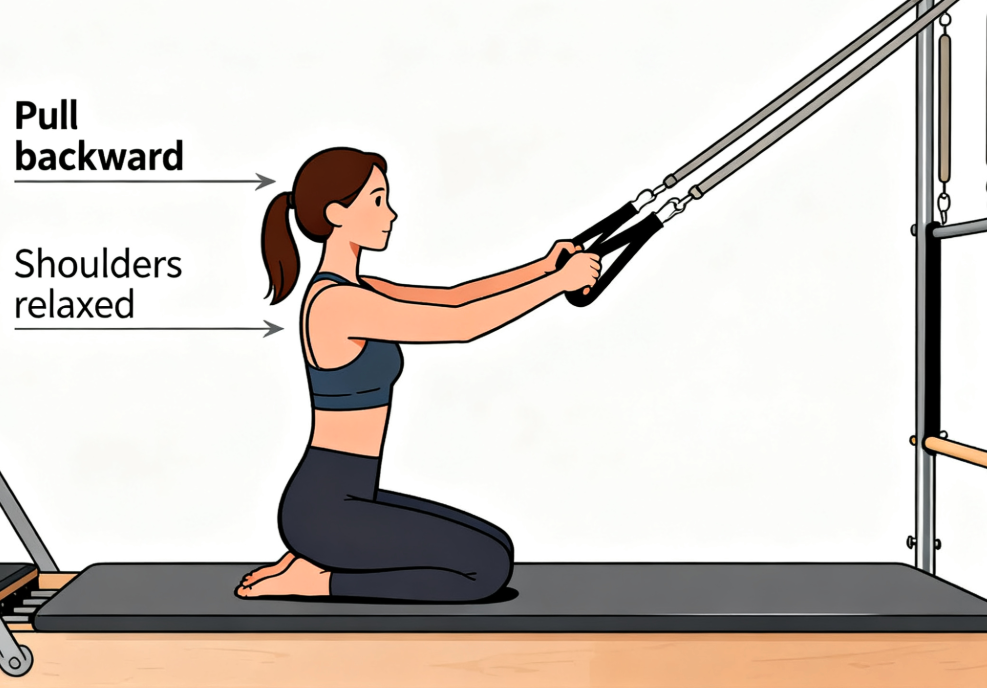
Sit or kneel on carriage
Hold straps and pull backward
Keep shoulders relaxed
Reps: 10–12
Benefits: Strengthens arms, back, and posture.
Lie on carriage with legs in tabletop
Pump arms up and down while breathing deeply
Count to 100 in sets of 10
Benefits: Builds endurance, strengthens abs.
When it comes to mastering the Pilates reformer, it’s important to remember that results come from control, not speed. The beauty of Pilates lies in its emphasis on precision and mindfulness. By taking your time to perform each movement with deliberate control, you engage the right muscles and build strength gradually. This approach not only enhances your overall performance but also reduces the risk of injury. Rushing through exercises can lead to poor form and strain, so always prioritize quality over quantity.
Another key tip for mastering the Pilates reformer is to alternate muscle groups. Avoid overworking just your abs or arms. Instead, focus on a balanced workout that targets different areas of your body. This approach ensures that you develop overall strength and flexibility, rather than focusing solely on one muscle group. By alternating muscle groups, you also reduce the risk of overuse injuries and keep your workouts interesting and challenging.
Proper form is essential for a safe and effective Pilates practice. One common mistake beginners make is lifting their chin, which can strain the neck. To prevent this, keep your chin tucked slightly towards your chest. This position helps maintain a neutral spine and engages the muscles in your neck and upper back, enhancing your overall posture. Keeping your chin tucked also helps you maintain focus and control during your exercises.
Consistency is key when it comes to mastering the Pilates reformer. Aim for 2–3 sessions per week to see visible results. Regular practice helps build strength, flexibility, and endurance. It also allows your body to adapt to the movements and techniques, making each session more effective. By committing to a consistent schedule, you’ll notice improvements in your form, control, and overall fitness.
Finally, it’s important not to compare yourself to others when mastering the Pilates reformer. Every body progresses differently, and what works for one person may not work for another. Focus on your own journey and celebrate your achievements, no matter how small. Remember that Pilates is a personal practice that evolves with time and dedication. Embrace the process and enjoy the journey towards a stronger, more balanced body.
One common mistake beginners make is using too many springs too soon. This can lead to excessive resistance, making exercises difficult and potentially straining your muscles. Start with lighter springs and gradually increase the resistance as you become more comfortable with the movements. This approach allows you to build strength and control without overwhelming your body.
Breathing is an essential component of Pilates, but beginners often forget to breathe properly. Proper breathing helps engage your core, maintain focus, and keep your body relaxed. Inhale deeply through your nose and exhale through your mouth, coordinating your breath with your movements. This not only enhances your workout but also ensures that you stay relaxed and focused throughout your session.
Pilates emphasizes control and precision, so rushing through movements is a common mistake beginners make. Take your time to perform each exercise with deliberate control. This approach ensures that you engage the right muscles and maintain proper form. Rushing can lead to poor technique and a higher risk of injury, so always prioritize quality over speed.
Maintaining proper posture is crucial in Pilates, but beginners often struggle with this. Poor posture, such as arching the back, can strain your spine and reduce the effectiveness of your exercises. Focus on keeping your spine neutral and engaging your core muscles to maintain proper alignment. Proper posture not only enhances your workout but also helps prevent injuries.
Another common mistake is ignoring muscle balance and overusing one side of your body. This can lead to imbalances and potential injuries. Make sure to alternate sides and focus on engaging both sides of your body equally. This approach ensures that you develop overall strength and flexibility, reducing the risk of imbalances and injuries.
Not at all. It looks intimidating, but once you try a few moves, you’ll realize it’s beginner-friendly.
Two to three times per week is ideal for noticeable results.
No. Most people go barefoot or wear grip socks for better stability.
Most people notice improved posture and strength within 6–8 weeks.
Learning how to use a Pilates reformer doesn’t have to be intimidating. Once you break down its parts, understand the basics of breathing and posture, and start with beginner-friendly exercises, it becomes a powerful tool for both fitness and wellness.
Stay patient, focus on form, and enjoy the process. With consistent practice, you’ll discover that the reformer is more than just equipment—it’s a pathway to strength, balance, and confidence. Choose Jinan Senya Equipment Co., Ltd. for your Pilates journey and experience the difference with our top-notch equipment.


