Views: 128 Author: Site Editor Publish Time: 2026-08-14 Origin: Site


Every Pilates practitioner eventually faces a common dilemma. You crave the smooth, unyielding stability of studio-grade equipment. However, you also need to reclaim your living space once the workout ends. This tension between performance and convenience drives the demand for innovative, space-saving designs. We look past glossy marketing claims to examine the true mechanics of these machines. We evaluate structural integrity, material science, and realistic setup requirements for heavy-duty folding units.
Our objective is to provide an evidence-based perspective. Not all folding mechanisms perform equally under the stress of dynamic exercise. Verifying load capacities remains critical for both your safety and the longevity of the machine. This guide gives you the precise criteria necessary to select a foldable aluminum pilates reformer. You will learn how engineering choices directly impact carriage glide, frame rigidity, and your overall practice quality.
Material advantage: Extruded aluminum offers the highest strength-to-weight ratio, allowing for true portability without sacrificing the rigidity required for dynamic Pilates movements.
Weight capacity verification: A genuine heavy duty pilates reformer must support at least a 150kg static and dynamic load without rail deflection.
Hinge engineering: The quality of the central folding hinge determines carriage smoothness; inferior designs create a noticeable "bump" during travel.
Space planning: Factor in not just the folded footprint, but the active clearance space required for full carriage extension and strap work.
Choosing the right material forms the foundation of any reliable fitness equipment. Manufacturers constantly balance weight, durability, and cost. Aluminum emerges as the superior choice for foldable designs, but we must understand why it outperforms traditional alternatives.
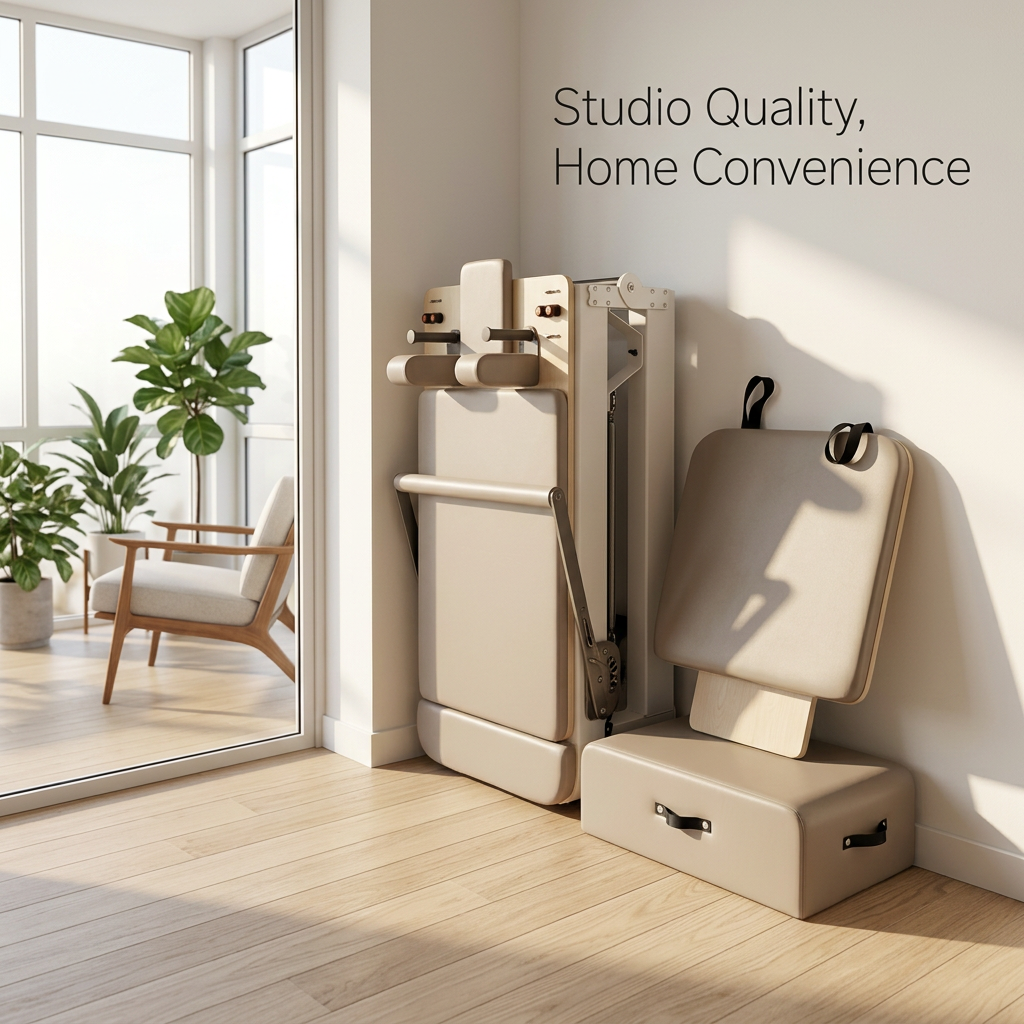
Traditional Pilates studios often feature massive, beautifully crafted maple or beechwood frames. Wood provides excellent acoustic dampening and a classic aesthetic. However, solid wood possesses significant limitations for home users. Wood remains highly susceptible to warping from humidity changes. Furthermore, dense hardwoods are exceptionally heavy. Folding and moving a solid wood frame daily requires immense physical effort. Conversely, an aluminum pilates reformer offers predictable manufacturing tolerances. The metal ignores humidity shifts and provides a consistent, warp-free track for the carriage wheels.
Steel provides unmatched tensile strength. Many heavy-duty gym machines rely entirely on steel construction. Yet, steel introduces two major problems for foldable equipment: extreme weight and vulnerability to corrosion. Sweat inevitably drips onto the frame during intense workouts. Steel eventually rusts if the powder coating chips. Portable metal pilates equipment utilizes aluminum because it naturally resists corrosion. More importantly, aluminum keeps the overall unit maneuverable. A single user can easily lift, fold, and roll an aluminum frame into a corner without straining their lower back.
Many consumers mistakenly believe mass equals durability. They assume a heavier machine automatically handles more stress. Modern engineering debunks this myth entirely. Aircraft-grade aluminum achieves phenomenal tensile strength through smart geometry. Manufacturers extrude aluminum into multi-chambered profiles. These hollow internal structures resist twisting and bending forces. This smart engineering keeps the frame light enough to fold while absorbing heavy shock impacts.
Material Type | Strength-to-Weight Ratio | Corrosion Resistance | Maneuverability Score |
|---|---|---|---|
Extruded Aluminum | Exceptional | High (Naturally resists rust) | High (Easy for one person) |
Solid Hardwood | Moderate | Low (Warping risk) | Low (Requires two people) |
Tubular Steel | High | Moderate (Requires thick coating) | Low (Extremely heavy) |
You must scrutinize the mechanical components before making a purchase. A well-designed machine operates invisibly. You should feel the spring resistance, not the frame shaking. Here is how to evaluate the core architecture.
The structural rating dictates the lifespan of the machine. A genuine 150kg pilates reformer handles far more than just a heavy static weight. Dynamic movements like jumpboard routines multiply the force exerted on the frame. High weight capacities benefit lighter users just as much. A heavily reinforced frame prevents micro-flexing over time. When a frame repeatedly flexes, the screw holes stretch and the joints weaken. A high load rating ensures the rails remain perfectly parallel year after year.
The central rail joint represents the biggest vulnerability in any foldable design. Poorly engineered joints create a jarring bump every time the carriage glides over the center. Look for seamless hinge locking mechanisms. The best machines utilize multi-wheel carriage systems. These systems typically employ four vertical load-bearing wheels and four horizontal tracking wheels. This eight-wheel configuration absorbs the microscopic gap at the joint, delivering a fluid ride comparable to stationary studio models.
Resistance mechanisms define your workout quality. The industry standard utilizes a five-spring system. Buyers should verify the materials used here. High-carbon steel springs retain their tension memory infinitely better than cheaper alloys. Look for color-coded systems offering varied tensions (usually one heavy, two medium, two light). Additionally, check if the gear bar allows micro-adjustments. A multi-position gear bar lets you tailor the initial spring tension precisely to your height and strength level.
Intense cardio workouts test the limits of floor grip. If you push aggressively off the footbar, the machine might creep backward across your floor. Premium units feature wide, adjustable leveling feet. These feet compensate for uneven flooring in basements or old apartments. Thick anti-slip rubber contacts anchor the frame securely. These enhancements transform a light aluminum frame into an unmovable anchor during heavy exertion.
Convenience should never compromise safety. The folding mechanism requires rigorous scrutiny because it bears extreme stress during transitions. We must evaluate how the machine locks, lifts, and stores.
An accidental collapse during a plank or jump routine can cause severe injury. Mandatory safety features include dual-locking pins and secure structural latches. When unfolding the unit, thick steel pins must slide completely through the central hinge block. Some high-end models use automatic gravity latches. Always visually verify the locking pins are fully engaged before sitting on the carriage.
Marketers often show users effortlessly folding machines with one hand. We need a realistic assessment of the physical effort required. A robust heavy duty pilates reformer still carries substantial mass. Centrally located transport wheels act as a fulcrum. You lift one end, and the wheels bear the majority of the weight. This leverage allows a single user to manage a heavy frame safely. However, pay attention to the lift handles. Ergonomic grips prevent pinch hazards when bringing the two halves together.
Manufacturers love to highlight "compact dimensions." They usually measure just the folded metal frame. Reality looks quite different. You must account for protruding components. Footbars, pulley risers, and shoulder rests add significant depth to the folded unit.
Footbars: Do they fold entirely flat against the frame, or do they jut out?
Shoulder rests: Are they quick-release removable, or permanently bolted?
Pulley risers: Can they telescope down to minimize vertical height during storage?
Measure your storage closet carefully and add at least six inches of buffer space to the manufacturer's stated dimensions.
Your experience immediately after delivery sets the tone for your practice. Understanding the initial setup and long-term care prevents frustration and protects your investment.
Buying a commercial foldable reformer does not mean hiring a contractor to build it. Most units ship highly pre-assembled to protect the delicate rail alignment. The carriage usually arrives pre-installed on the tracks.
Unbox the primary frame: Lay the folded unit flat on your designated workout area.
Engage the central hinge: Unfold the frame slowly and insert the main locking pins until they click securely.
Attach the accessories: Slot the shoulder rests into their designated brackets.
Install the resistance: Hook the high-carbon springs onto the carriage anchors.
Before your first workout, you must calibrate the moving parts. Uneven ropes cause asymmetrical muscle development. Pull both hand loops simultaneously to the center of the carriage. Adjust the cleats until the ropes maintain perfect equal tension. Next, test the footbar locking positions. Apply strong forward pressure to ensure the bar does not slip from its grooves. Finally, slide the empty carriage up and down the track. Listen for any clicking or grinding, which indicates the central hinge needs tighter engagement.
Realistic upkeep keeps the machine gliding silently for years. You only need a few minutes after each session.
Track care: Wipe down the aluminum tracks with a damp microfiber cloth. Sweat causes microscopic pitting over time.
Wheel cleaning: Hair and dust wrap around the wheel axles. Clean them monthly to prevent carriage drag.
Spring inspection: Check the metal loops at the end of each spring. Look for signs of metal fatigue or stretching. Replace any spring showing gaps in its coiled resting state.
You have evaluated the materials, mechanics, and maintenance. Now you must apply this knowledge to your specific living situation. A strategic approach prevents buyer's remorse.
Identify how often you actually need to fold the machine. Dedicated home studios rarely require folding. If you have a permanent spare room, you might prioritize a heavier, non-folding model. However, multi-use spaces demand daily stowage. If your living room transforms into your gym every morning, the folding mechanism becomes your most important feature. Choose a model emphasizing quick-release pins and robust transport wheels.
Look past flashy marketing badges promising "lifetime guarantees." Generic warranties often only cover the main aluminum extrusions. A frame rarely breaks. The true test of manufacturer confidence lies in the moving parts. Check the specific coverage duration for carriage wheels, hinge bearings, and springs. A reputable brand offers at least a one-year replacement policy on these high-wear components.
We must evaluate the long-term value rather than just the initial price tag. Ultra-budget models flood the market, promising commercial quality for pennies. These units frequently use thin-walled aluminum profiles. Under heavy loads, the metal flexes. Screw holes ovalize, and the carriage begins to rattle. You will likely replace a cheap machine within two years. Investing in verified structural testing and thicker aluminum extrusions guarantees a machine that endures daily use without degrading.
Selecting the right equipment requires balancing practical space constraints against rigorous physical demands. A foldable aluminum reformer represents a highly engineered compromise. When you choose a machine with thick extruded walls, a seamless locking hinge, and an honest 150kg rating, you successfully bring studio-quality resistance into your home.
Your next steps are clear and actionable. First, measure your intended active workout space. Ensure you have ample clearance for full carriage extension and wide arm sweeps. Next, verify the exact weight capacity of your shortlisted models. Finally, download and review the actual assembly manuals before clicking purchase. These manuals reveal the true complexity of the setup and the quality of the engineering.
A: It depends entirely on the hinge engineering. High-quality models use a precision-milled central joint and an eight-wheel carriage system. The multiple wheels bridge the tiny gap seamlessly. Inferior designs with cheap wheels and poor alignment will produce a noticeable bump during carriage travel.
A: Yes. The 150kg rating refers to the load capacity, not the machine's actual weight. Aluminum frames usually weigh between 40kg and 60kg. Center-mounted transport wheels create leverage, allowing a single average adult to lift one end and roll the unit easily.
A: Often, yes. Many foldable models accept standard jumpboards and sitting boxes. However, you must verify the internal width of the tracks and the proprietary locking mechanisms for the footbar. Always check the manufacturer's accessory compatibility list before buying third-party props.
A: For a single user practicing three to four times a week at home, springs typically last two to three years. You should replace them immediately if they show signs of rust, gaps between the coils at rest, or a noticeable loss of tension.


