Views: 0 Author: Site Editor Publish Time: 2026-09-30 Origin: Site


Opening a boutique fitness center requires precise timing and flawless execution. The procurement phase stands as a critical risk-management stage for new studio launches and franchise expansions. Founders constantly face a core conflict during this intense period. You must balance negotiating favorable pricing through bulk minimums against the harsh reality of lease holding costs while waiting for delayed shipments. An inventory misstep here drains your capital long before the doors ever open.
This article provides commercial buyers a realistic, evidence-based framework to calculate delivery timelines and negotiate order minimums. You will learn how to align manufacturing schedules, navigate global freight logistics, and ultimately avoid launch-day equipment shortages. Mastering these logistics protects your initial investment and ensures a smooth operational launch.
Procuring commercial fitness gear involves far more than simply selecting attractive designs. Your procurement cycle dictates your entire pre-launch timeline. Define a successful procurement cycle by aiming for delivery 14 to 21 days before the grand opening. This specific window allows ample time for physical installation. It also gives your staff sufficient time for hands-on training on the new machines.
Underestimating transit times carries a heavy financial penalty. Miscalculation often leads to paying commercial rent on an empty studio. Imagine securing a prime retail location, signing the lease, and scheduling your marketing rollout. If your Pilates studio equipment sits delayed at a port, your daily cash burn accelerates rapidly. You lose potential revenue while still covering fixed overhead expenses.
Founders must evaluate the trade-off between holding inventory and preserving cash flow. Tying up capital in large inventory orders satisfies factory minimums and secures lower unit prices. However, paying a slight premium for low-volume orders preserves immediate cash flow. Preserved cash flow funds vital pre-launch marketing campaigns and staff salaries. You must choose the model fitting your specific financial runway.
Minimum Order Quantities dictate the baseline of your purchasing strategy. Heavy equipment behaves differently than smaller accessories. A standard pilates reformer, Cadillac, or Wunda Chair usually carries a low factory minimum. Manufacturers often accept orders ranging from one to five units for these large pieces. However, shipping economics heavily favor larger batches. Transporting a single heavy unit overseas consumes your profit margin rapidly.
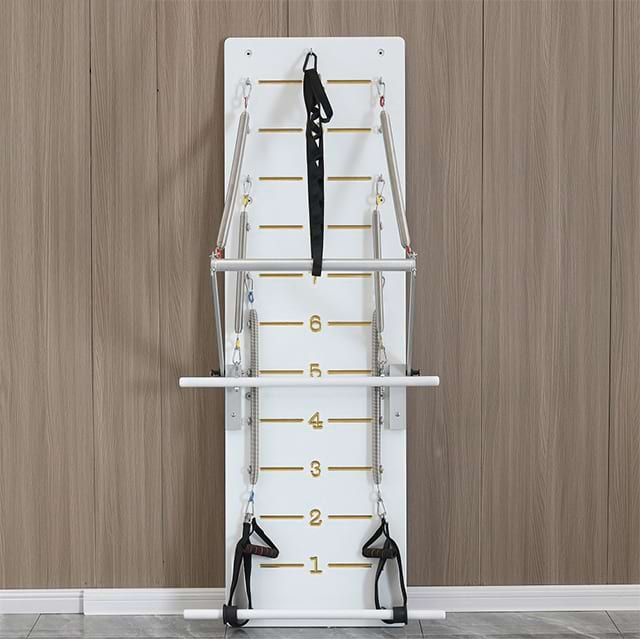
Wall and accessory requirements present a different logistical challenge. Smaller setups demand different production runs. Items like a pilates springboard workout pilates wall equipment require batch manufacturing. Factories produce these space-saving units in large continuous runs to maintain efficiency. Therefore, they demand much higher unit MOQs. You might face minimums of fifty units for accessories compared to two units for heavy machinery.
Smart commercial buyers overcome these hurdles using the studio package strategy. You can negotiate aggregate MOQs by purchasing bundled starter packages. A bundle combines several large machines alongside smaller accessories. This strategy satisfies the factory's minimum revenue requirement. The manufacturer earns enough to justify the production run. Meanwhile, you avoid overstocking a single item type in your backroom.
Total lead time requires a comprehensive understanding of global supply chains. Many buyers mistakenly believe manufacturing time equals delivery time. The reality involves a multi-phase journey across oceans and highways. You must calculate every single segment accurately.
Implementation realities demand buffer zones. Always pad your timelines by 15 to 20 percent. Real-world variables disrupt theoretical schedules constantly. Seasonal factory closures, such as the Lunar New Year, halt production entirely. Port congestion slows down vessel offloading. Random customs exams add unexpected weeks to transit times. Planning for perfection guarantees failure.
| Procurement Stage | Estimated Duration | Key Variables Impacting Time |
|---|---|---|
| Order Finalization | 3 - 7 Days | Bank transfer speeds, contract signing |
| Factory Production | 30 - 45 Days | Material availability, factory workload |
| Ocean Transit | 30 - 60 Days | FCL vs LCL, weather, port congestion |
| Customs Clearance | 5 - 15 Days | Documentation accuracy, random inspections |
| Inland Freight | 7 - 14 Days | Truck availability, final destination distance |
Customization transforms a standard production run into a specialized engineering project. Standard configurations speed up delivery significantly. Selecting standard Pilates studio equipment specifications allows factories to pull from existing component inventory. They assemble pre-cut materials quickly. This process bypasses lengthy raw material sourcing phases and shortens overall lead times.
Choosing bespoke options triggers the custom penalty. Branded upholstery colors require special fabric sourcing. Custom wood finishes demand changes to standard coating processes. Altered frame heights force engineers to adjust standard assembly jigs. These changes require re-tooling the production line. Special raw material sourcing inherently drives up the required MOQ. Factories will not buy custom fabric for just two machines. Furthermore, customization adds two to four weeks to basic production schedules.
Risk mitigation requires strategic discipline during phase-one studio launches. Prioritize standard specifications to secure core equipment quickly. Fast delivery ensures your studio opens on time. You can reserve heavy customization for phase-two expansions. During expansions, your primary studio already generates revenue. Timelines become less critical, allowing you to wait patiently for bespoke machinery.
Choosing a manufacturing partner dictates the success of your entire procurement cycle. Move beyond glossy marketing claims and heavily edited brochures. Teach yourself to evaluate a Pilates studio equipment supplier using evidence-oriented vetting. Ask for their historic on-time delivery rates. Demand production capacity transparency. A reputable factory will gladly share past performance metrics and current queue lengths.
Contractual protections shield your business from logistical disasters. Clear Incoterms define responsibility and financial risk during transit. FOB (Free on Board) gives you control over the ocean freight pricing. DDP (Delivered Duty Paid) simplifies logistics entirely for the buyer. The supplier handles all shipping, duties, and final delivery. However, DDP requires explicit delivery date guarantees built into your contract.
Watch carefully for industry red flags. Avoid suppliers offering suspiciously low MOQs combined with unusually fast ocean freight promises. This combination rarely exists in reality. It often indicates poor quality control measures. It might also reveal a fundamental misunderstanding of global logistics. Empty promises lead to delayed openings and lost capital.
Implement a strict shortlisting logic framework for your next steps. Request a phased delivery schedule quote from your top three choices. Clarify warranty activation dates in writing. Does the warranty begin upon factory purchase or upon final delivery? Ask for references from similar-sized commercial studios. Speak directly to previous buyers about their post-purchase support experiences.
Successful equipment procurement requires balancing multiple commercial variables simultaneously. It remains a mathematical balance of MOQ costs, freight physics, and lease timelines. Managing these factors correctly preserves your cash flow and guarantees a smooth grand opening.
Take proactive control of your supply chain today. Download a studio launch timeline template to map your specific deadlines. Contact an experienced sales team for a transparent, no-obligation quote on commercial equipment packages. Proper planning transforms procurement from a stressful risk into a strategic advantage.
A: Yes. You can utilize bundled packages to meet factory revenue minimums without overstocking single items. Alternatively, expect to pay a slight premium for sample or low-volume orders. This premium compensates the factory for disrupting their bulk manufacturing lines.
A: We recommend a four to five-month runway. This timeline accounts for standard manufacturing, sea freight transit, potential customs delays, and final inland delivery. It also leaves ample time for physical installation and staff training before opening doors.
A: Yes. Custom materials typically add two to four weeks to the standard production timeline. Furthermore, custom requests may trigger a higher MOQ requirement. The factory must often order special fabric rolls from third-party textile suppliers to fulfill your request.


