Views: 0 Author: Site Editor Publish Time: 2026-09-23 Origin: Site


Sourcing equipment for a new or expanding studio represents a major capital expenditure. This crucial investment directly impacts client retention and operating margins. Studio owners often face a frustrating bottleneck during the procurement process. You might feel forced to overpay for legacy brands plagued by frustratingly long lead times. Alternatively, you might risk your hard-earned business reputation on unproven, consumer-grade alternatives. Neither option serves a growing business well. You need reliable machines built specifically for heavy, continuous use. Every squeak, wobble, or rough glide affects how paying clients perceive your brand. This guide breaks down exactly how you can evaluate, shortlist, and procure a complete fleet of equipment. We will focus strictly on durability, spatial efficiency, and smart vendor evaluation. By understanding the core mechanics and material differences, you can make informed purchasing decisions. Your studio deserves high-performing gear built to last. We will show you precisely what to look for.
Home machines handle very light workouts. They typically see only three to five hours of use weekly. A commercial Pilates reformer operates entirely differently. It must withstand 40 to 60 hours of intense weekly use. Consumer frames often warp under this constant, repetitive stress. Professional beds utilize reinforced components to survive daily group classes without degrading.
Using non-commercial equipment in a professional setting introduces severe business risks. Consumer units carry significantly lower weight capacities. Pushing these physical limits can cause sudden mechanical failures during a class. This jeopardizes client safety immediately. It also creates major liability issues for your business. Most commercial insurance policies will void coverage if a studio uses non-commercial grade equipment for professional services.
Clients notice equipment quality the moment they lie down. The carriage glide must feel perfectly smooth. Spring tension must remain consistent throughout the entire movement range. Structural stability signals safety and premium value to your members. Shaky frames or squeaky springs damage your brand reputation instantly. High-quality beds justify premium class pricing. They keep paying members coming back week after week.
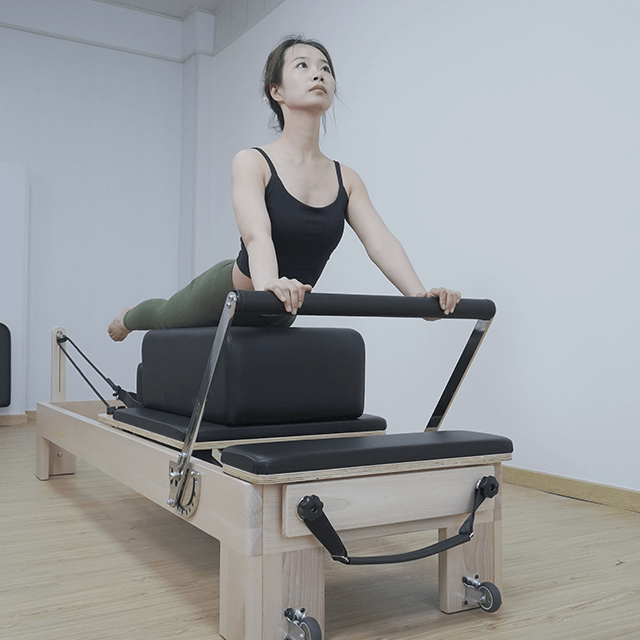
Frame material dictates both aesthetics and longevity. A classic maple wood reformer offers a highly premium aesthetic. Wood dampens sound naturally, creating a quieter studio environment. It provides incredible structural rigidity during heavy jumping exercises. Aluminum frames offer completely different advantages. They weigh much less and resist ambient moisture better. They also bring a sleek, modern visual appeal to your fitness space.
Frame joints take massive abuse over time. Look closely for traditional mortise and tenon joints in wooden frames. These interlocking wooden joints prevent loosening over years of vibration. For metal frames, demand continuous robotic welds. Spot-welded frames often develop annoying squeaks under heavy user loads. Solid joint construction ensures years of silent, reliable operation.
A frictionless carriage ride defines the entire user experience. You need seamless, anodized aluminum rails. Precision-sealed bearings are absolutely non-negotiable. These specialized components prevent rough, metal-on-metal grinding. They ensure the carriage glides effortlessly, regardless of the user's weight.
Commercial springs utilize high-carbon steel. They degrade slowly over time, but even the best springs lose tension eventually. High-volume studios typically replace these springs every 12 to 24 months. Uniform tension across all beds is crucial for class consistency.
Upholstery takes a severe beating in group classes. You need high-density EVA foam padding. It resists flattening over years of continuous use. Marine-grade, tear-resistant vinyl is essential. This rugged material withstands harsh hospital-grade antibacterial wipe-downs. Standard residential vinyl dries out, flakes, and cracks quickly under heavy cleaning.
Class transitions must happen rapidly to keep schedules tight. Instructors need gear blocks and footbars they can adjust in seconds. Rapid-adjust rope systems eliminate tangled delays during complex routines. Smooth, intuitive ergonomics keep group classes flowing seamlessly.
Standard commercial units measure approximately 94 inches long and 27 inches wide. However, you must factor in dynamic movement clearance. Instructors need two to three feet of empty space around each machine. This clearance ensures safe cueing and adjustment access. Cramping machines together frustrates clients and creates immediate safety hazards. Every single standard Pilates reformer needs adequate breathing room to function properly in a group setting.
Boutique studios often face tight square footage constraints. Multi-disciplinary spaces need highly flexible floor layouts. Stackable or upright-storing models solve this spatial problem perfectly. You can clear the studio floor for yoga or mat classes in mere minutes. Upright storage maximizes your revenue per square foot. You must verify these foldable beds meet strict commercial durability standards before purchasing.
Growing from three machines to ten requires strategic, long-term planning. You must standardize your equipment fleet. Mixing different brands creates inconsistent, frustrating client experiences. Spring tensions vary wildly between different manufacturers. Uniform equipment simplifies new instructor training. It also streamlines your spare parts inventory considerably.
Unit price only tells part of the financial story. You must account for hidden logistics costs immediately. Freight and Less-Than-Truckload (LTL) shipping add significant expenses to bulk orders. Installation labor often requires specialized, costly technicians. Import duties apply if buying directly from overseas manufacturers. Always request fully landed pricing before signing any procurement contract.
Top-tier legacy brands offer excellent resale value down the line. However, they frequently suffer from massive production backorders. Emerging commercial manufacturers provide a highly attractive alternative. They often deliver much faster lead times and lower upfront costs. Many utilize the exact same industrial components as legacy brands. You can achieve high quality without paying the luxury brand markup.
A solid commercial warranty protects your large capital investment. Expect a lifetime guarantee on metal or hardwood frames. Mechanical moving parts should carry one to two years of robust coverage. Accessible replacement parts matter deeply. Waiting weeks for a simple replacement wheel halts your business operations. Ensure your chosen vendor stocks wear-and-tear parts domestically.
Writing a clear Request for Proposal (RFP) saves immense time. Specify your exact order volume upfront. Detail your required delivery timeline clearly. List any necessary customizations, like specific vinyl brand colors. A precise RFP forces vendors to provide accurate, highly competitive bids.
Never buy a large fleet blindly. Request detailed technical specification sheets from the manufacturer. Ask vendors for direct references from current studio owners. Better yet, order a single floor model first. Have your lead instructors test the carriage glide and spring tension thoroughly. Real-world validation prevents incredibly expensive mistakes.
Volume buyers hold significant negotiation power. Ask manufacturers to bundle essential accessories. Sitting boxes and jump boards often carry high profit margins. Vendors might throw them in for free to close a large deal. You can also request extended payment terms to assist your cash flow during the studio build-out phase.
| Evaluation Criteria | Priority Level | Desired Benchmark |
|---|---|---|
| Frame Warranty | High | Lifetime coverage |
| Spring Replacement Cost | Medium | Bulk discount availability |
| Shipping Lead Time | High | Under 45 days |
| Custom Upholstery | Low | Brand color matching |
Sourcing a commercial fleet represents a major investment in business risk mitigation. Quality equipment elevates the entire client experience naturally. It easily justifies premium pricing and encourages repeat bookings. Take adequate time to calculate your exact space requirements. Outline your long-term maintenance plans before engaging any sales representatives. You hold the power when you truly understand frame mechanics and procurement logistics. Download a wholesale spec sheet today to begin your research. Request a bulk pricing catalog to compare your available options. Schedule a vendor consultation to finalize your studio layout and equipment strategy with confidence.
A: A high-quality commercial frame typically lasts seven to ten years or longer under heavy studio use. However, wear-and-tear components require regular maintenance. You must replace springs, ropes, and carriage wheels periodically to maintain optimal performance.
A: Yes, provided the wood is properly treated. Manufacturers must use kiln-dried maple to prevent structural warping. Protective varnishes seal the wood securely against moisture. You should also utilize studio climate control systems to maintain consistent humidity levels.
A: High-volume studios should replace springs every 12 to 24 months. Intensive daily usage causes steel coils to stretch and lose optimal tension. Regular replacement maintains client safety and ensures consistent resistance across all your machines.
A: Premium stackable models utilize reinforced aluminum or hybrid frames to ensure maximum durability. They weigh less to allow safe lifting, which sometimes slightly alters the machine's absolute rigidity. However, reputable commercial stackable beds easily handle rigorous daily group classes.


