Views: 0 Author: Site Editor Publish Time: 2026-09-22 Origin: Site


The fitness industry is rapidly changing. Studio owners and fitness retailers are actively moving away from generic, off-the-shelf equipment. They want custom-branded solutions. This shift helps them protect profit margins and build long-term brand equity. However, jumping into custom manufacturing presents unique challenges.
Custom manufacturing through OEM or ODM requires significant upfront capital. You must commit to Minimum Order Quantity (MOQ) requirements. You also face much longer lead times. Buying standard stock often feels safer for new businesses. Yet, customizing your own equipment scales better. It gives you ultimate control over product quality.
You need a solid framework to make this decision. Has your business reached the necessary operational threshold? This guide helps you decide if you should design and brand a custom aluminum Pilates reformer. You will learn how to align specifications, mitigate manufacturing risks, and evaluate potential supply chain partners.
You cannot base manufacturing decisions on emotion. Building a custom product requires specific business milestones. These milestones justify the time and financial investments required for OEM (Original Equipment Manufacturer) or ODM (Original Design Manufacturer) projects. You must clearly identify your success criteria before contacting factories.
Consider two distinct scenarios where customization becomes highly profitable:
You must understand the break-even logic. Compare the landed costs of a custom unit against wholesale purchasing. Look at a 12-to-24-month horizon. Landed costs include the manufacturing price, freight, customs, and initial prototyping fees. Custom molds and R&D add upfront expenses. However, the per-unit cost drops significantly once you hit mass production. If you project selling or utilizing 100 units next year, the math usually favors custom manufacturing.
Brand equity also plays a massive role. Proprietary design elements create a strong moat against competitors. You might request custom upholstery density. You might engineer a specific spring resistance profile. These unique touches make your equipment irreplaceable. When clients fall in love with your specific reformer feel, they cannot simply replicate the workout elsewhere.
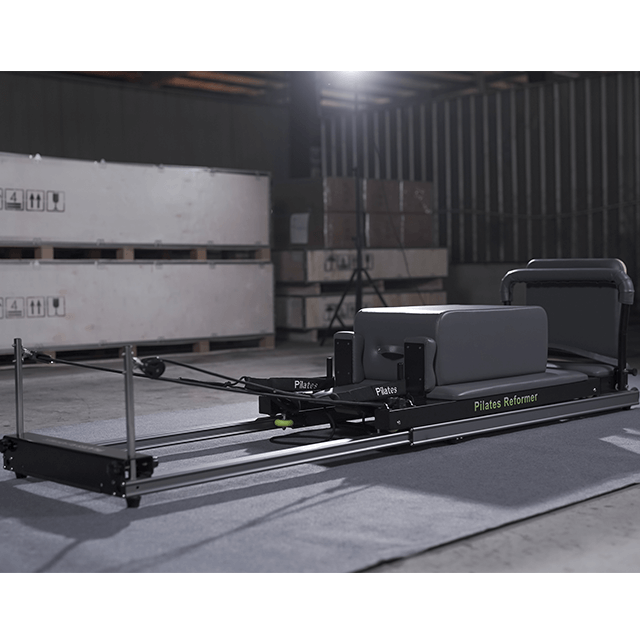
Technical choices dictate product success. Your engineering decisions directly impact user experience. They also determine unit durability. You cannot assume a factory knows your target audience better than you do. You must align every feature to a specific user outcome.
Material grade serves as your foundation. Aerospace-grade aluminum is non-negotiable for commercial use. It offers a superior weight-to-strength ratio. Heavy studio use stresses the frame daily. High-grade aluminum prevents rail warping over time. It keeps the carriage gliding smoothly year after year.
Carriage and rail dynamics define the user experience. You must evaluate the wheel systems carefully. Polyurethane (PU) wheels offer excellent acoustic dampening. They provide a whisper-quiet glide. Nylon wheels might last longer in harsh environments but often sound louder. A premium studio setting demands silent operation.
You must align your design with your specific target market. Commercial and consumer spaces require vastly different engineering approaches.
Standardizing your spec sheet is critical. Do not enter the contract phase blindly. You must lock in exact aluminum Pilates reformer specifications beforehand. Detail the precise frame dimensions. Specify the exact spring tensions. Define the upholstery density and vinyl thickness. Leaving these details vague invites manufacturing shortcuts.
Below is a quick reference chart showing typical specification differences between studio and home models.
| Specification Metric | Commercial Studio Model | Consumer Home Model |
|---|---|---|
| Frame Structure | Fixed, single-piece extruded aluminum | Center-hinge foldable design |
| Aluminum Gauge | Thick wall (3mm+) for heavy loads | Medium wall (2mm) to reduce weight |
| Rail Length | Extended (typically 100+ inches) | Compact (typically 90-95 inches) |
| Storage Mechanism | Vertical stand capability | Under-bed folding capability |
Many buyers underestimate custom manufacturing timelines. You must embrace transparent scheduling. A realistic product development lifecycle takes several months. Rushing the process guarantees costly mistakes.
Expect a structured timeline for a fully custom project. You will spend about 30 days finalizing CAD drawings and specifications. Prototyping takes another 30 to 45 days. You must test this prototype rigorously. Once approved, mass production requires approximately 60 days. Finally, ocean freight and customs clearance add another 30 days. You need a four-to-six-month runway from concept to delivery.
Cash flow and Minimum Order Quantities (MOQs) present distinct challenges. Factories will not spin up assembly lines for five units. Standard white-labeling requires lower MOQs. White-labeling simply places your logo on an existing factory design. You can often start with 10 to 20 units. Full structural customization requires higher volume commitments. Custom molds cost money. Factories usually demand 50 to 100 units for unique ODM projects.
You must protect your business against "quality fade." This phenomenon ruins many D2C brands. A factory produces a flawless prototype. You approve it. Six months later, the mass-produced units arrive. They feel flimsier. The factory secretly substituted cheaper aluminum alloys. They used low-grade springs. They did this to increase their own margins.
You must contractually prevent quality fade. Your manufacturing agreement must explicitly state the acceptable material grades. You should require third-party quality control inspections before shipment. Independent inspectors can verify the aluminum gauge and spring tension. Never pay the final invoice until the inspection report clears.
Finding a factory seems easy. Alibaba lists thousands of vendors. However, finding a reliable B2B manufacturing partner requires strict vetting. You must look far beyond glossy product photos. A professional factory acts as an extension of your business.
You should evaluate partners across several critical dimensions. Start by examining their prototyping capabilities. Do they have an in-house Research & Development (R&D) team? They need engineers who can translate your CAD files into working samples. A factory lacking R&D will struggle to meet custom functional requirements.
Certifications and compliance matter immensely. You cannot sell unsafe fitness equipment. Demand proof of ISO quality management certifications. Request CE and RoHS certifications. These documents prove the factory meets international safety standards. Compliance is critical for liability protection when reselling any pilates reformer to the general public.
Supply chain transparency separates average factories from elite partners. Can the aluminum Pilates reformer supplier verify their raw material origins? Ask them about their springs. Imported Korean or German piano wire performs much better than generic mild steel. Ask about their aluminum extrusion processes. Great suppliers answer these questions proudly. Poor suppliers avoid them.
You must establish a rigorous "Sample Test" framework. Never sign off on mass production without destroying a prototype first. You need to stress-test the unit. Conduct severe load testing. Perform repetitive carriage movement tests to check for track wear. Run exhaustive spring cycle testing. A spring should maintain its tension profile after tens of thousands of stretches. If the prototype fails, the factory must revise it. Do not accept excuses.
Customizing an aluminum reformer represents a massive strategic pivot. You transition from being an equipment consumer to an equipment owner. This move highly increases long-term profitability. It builds incredible brand equity. However, it requires significant operational maturity and strict quality control.
Start your journey by auditing your business. Review your 12-month demand pipeline. Ensure you have the volume to justify MOQs before engaging manufacturers. Do not waste a factory's time if you only need three machines.
Your next step is clear. Document your non-negotiable specifications today. Write down every material grade, dimension, and aesthetic detail. Once your brief is solid, begin soliciting Requests for Quotes (RFQs). Target a vetted shortlist of specialized fitness equipment suppliers. Protect your brand, demand quality, and build equipment your clients will love.
A: White-labeling standard models often requires an MOQ of 5 to 10 units. This approach just adds your logo to existing frames. Full custom manufacturing, which involves custom molds or unique structural changes, typically demands an MOQ of 50 or more units to offset factory setup costs.
A: The entire process generally takes 3 to 5 months. Expect roughly 30 days for CAD designs, 45 days for prototyping, 60 days for mass production, and 30 days for ocean freight and customs clearance.
A: Yes. The home fitness market heavily favors foldable designs due to severe space constraints. However, you must rigorously test the center hinge durability and the lock-pin safety mechanisms to prevent accidents during intense workouts.
A: You must use comprehensive NNN (Non-Disclosure, Non-Use, Non-Circumvention) agreements. Ensure your contract is enforceable in the manufacturer's local jurisdiction. Always choose a supplier with documented, strict intellectual property protocols.


