Views: 126 Author: Site Editor Publish Time: 2026-09-14 Origin: Site


Investing in premium fitness equipment requires significant capital upfront. Buyers often gravitate toward beautiful, natural materials when outfitting their spaces. You want gear delivering both striking visual appeal and undeniable durability. However, a major question arises when choosing equipment for high-volume environments. Buyers need to know if the gorgeous aesthetic of wood compromises long-term structural integrity under rigorous, multi-client daily use. Constant dynamic loading and sweat exposure will aggressively test any frame.
This article explores exactly how physical stress, environmental degradation, and maintenance realities impact this specific material. We examine load tolerances, finish resilience, and daily wear factors to determine true long-term ROI. Understanding these operational realities helps you avoid costly premature replacements. You will gain actionable insights into selecting the right specifications and maintaining your equipment correctly. Read on to discover how to protect your investment for years to come.
Daily dynamic loading causes natural micro-shifts in wood; dense hardwoods like maple resist warping better than softer woods but still require quarterly hardware tensioning.
Sweat, acidic body oils, and frequent cleaning degrade standard clear coats over a 2-to-3-year cycle, necessitating specific finish specifications.
A professional maple pilates reformer for home use generally outlasts studio counterparts by 5+ years due to lower daily hour utilization and stable climate control.
Selecting a reliable supplier with accessible replacement hardware is more critical to long-term equipment lifespan than the wood frame itself.
Daily fitness routines place massive physical stress on equipment frames. We must analyze how a maple wood reformer handles this energy. Maple possesses a Janka hardness rating of approximately 1,450 lbf. This high density allows the wood to withstand the repeated, sudden impacts of jump board exercises. Heavy spring resistance creates immense horizontal tension. A dense hardwood frame resists bowing under this pressure. It maintains strict alignment across the carriage rails. Lesser woods flex under heavy loads, which ultimately derails the carriage mechanism. Maple provides a rigid, dependable foundation.
Materials handle kinetic energy very differently. Aluminum frames often reverberate. They send vibrations directly back into the user's joints during rapid movements. Contrast this against maple's natural shock-absorbing properties. Dense wood acts as an acoustic and kinetic dampener. It absorbs sudden impacts smoothly. This structural density significantly reduces joint stress for users during intense plyometric sessions. Furthermore, wood excels at noise dampening. It creates a distinctly quieter environment within a busy studio setting. You want a pilates reformer delivering silent, smooth operation, and hardwood naturally facilitates this.
Even the strongest wood has vulnerabilities. The primary risk point in daily use is the hardware integration. We must closely monitor the connection points where metal rails, spring bars, and bolts meet the wood frame. Metal and wood react differently to temperature and load. Dynamic exercise wiggles these metal components daily. Over time, this constant micro-movement can bore out the pilot holes. Quality manufacturers mitigate this by using steel threaded inserts rather than driving screws directly into the raw wood. You must inspect these connection nodes routinely to prevent permanent frame damage.
Wood is an organic material. It breathes, shifts, and settles. We need to transparently discuss how daily use forces wood joints to settle into their final positions. You cannot simply assemble a wooden machine and ignore it. It requires a strict tightening schedule during the first 90 days of implementation. Follow this foundational settling protocol:
Day 14: Perform a gentle quarter-turn tightening on all primary carriage rail bolts.
Day 30: Inspect and torque the footbar hinge plates and spring bar anchors.
Day 90: Conduct a comprehensive tensioning of every visible bolt to secure the settled joints.
Ignoring this settling phase guarantees squeaking and premature hardware fatigue down the road.
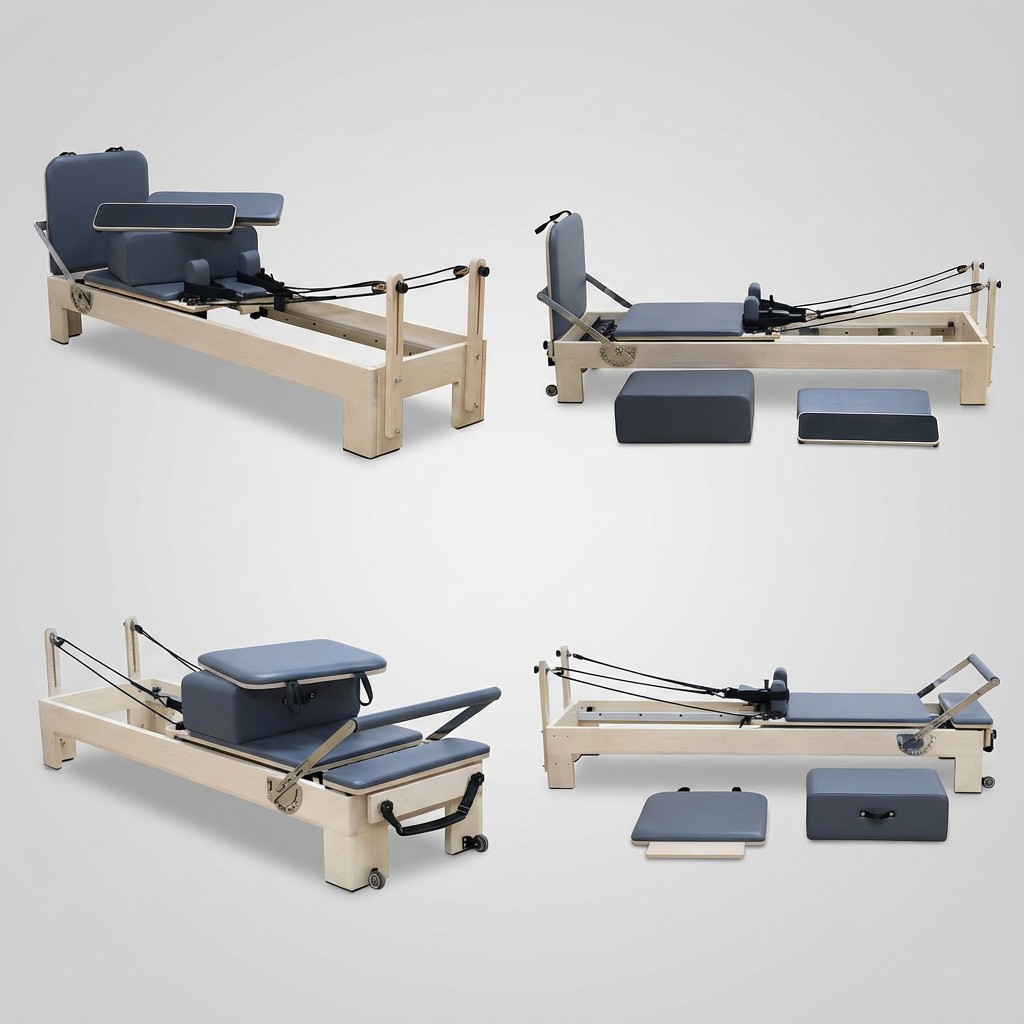
Studios harbor complex micro-climates. Daily exposure to sweat introduces acidic moisture directly onto the equipment surface. Salt from human sweat eats away at protective varnishes over time. Furthermore, varying studio humidity levels drastically affect maple. Wood acts like a sponge. It absorbs ambient moisture and expands. Conversely, it releases moisture and contracts in dry air. You face a severe risk of micro-cracking if the room humidity drops below 30%. You must maintain stable climate control to protect the structural integrity of the timber. Keep humidity levels strictly between 40% and 60%.
Sanitation is mandatory, but it destroys equipment. We must evaluate the impact of harsh, daily antibacterial wipe-downs on the wood’s finish. Standard commercial gym wipes contain heavy alcohols and bleach derivatives. These chemicals strip away basic wood lacquers within months. This friction leaves the raw wood exposed to sweat and grime. Frame this reality carefully: you absolutely need marine-grade or specialized polyurethane sealants. These advanced coatings resist chemical degradation. Always instruct your cleaning staff to use pH-neutral cleaning solutions. Wipe the frame dry immediately to preserve the specialized sealant layer.
It is crucial to clarify what actually fails first on these machines. While the maple frame endures for decades, the moving parts do not. Friction from daily carriage movement primarily degrades the polyurethane wheels and the inner aluminum tracks. The wood itself remains structurally sound while the consumable parts take the beating. You must budget for track and wheel replacements rather than frame repairs.
Component Wear Timeline Under Daily Use
Component | Material Type | Estimated Commercial Lifespan | Primary Failure Indicator |
|---|---|---|---|
Carriage Wheels | High-Density Polyurethane | 12 to 24 Months | Pitting, flat spots, or grinding noises |
Glide Tracks | Extruded Aluminum | 3 to 5 Years | Oxidation buildup or deep friction grooves |
Resistance Springs | Carbon Steel | 12 to 18 Months | Loss of recoil tension or visible gapping |
Frame Core | Solid Maple Wood | 10+ Years | Finish dulling (structural failure is rare) |
How the wood pieces connect matters more than the wood itself. You need to define the standard for commercial viability. High-volume environments require mortise and tenon joints augmented by steel reinforcement brackets. This interlocking design disperses physical stress evenly across the timber. Contrast this against basic dowel construction. Dowels snap under lateral shearing forces. When reviewing maple wood reformer specifications, always demand verifiable proof of reinforced joinery. A beautiful frame means nothing if the corners pull apart under heavy spring tension.
Flimsy wood vibrates and cracks. We must identify the baseline specifications required for multi-shift studio environments. Manufacturers sometimes cut costs by using thinner planks. You must insist on thick, dense timber.
Minimum Frame Thickness: The core side rails must measure at least 30mm in thickness to prevent bowing.
Leg Stanchions: Corner posts require a minimum 100mm block construction for absolute stability.
Integrated Rail Seating: Aluminum tracks should sit inside routed wooden channels, not simply screw onto a flat surface.
Clear Coat Layers: Demand at least three layers of commercial-grade polyurethane finish.
Usage context dictates lifespan. A professional maple pilates reformer for home can utilize the exact same standard commercial specs but will survive much longer. Studio machines endure 8 to 10 hours of heavy use daily. A home unit might see 1 to 2 hours. Furthermore, home environments rarely experience the massive humidity swings caused by twenty sweating bodies in a closed room. Therefore, a home user requires a completely different environmental maintenance checklist. They focus less on intense wipe-downs and more on dust prevention in the track system.
Warranties rarely cover what you think they cover. We need to break down what standard guarantees actually entail. Most manufacturers offer a 5-year or lifetime warranty on the wood frame itself. However, they almost always exclude surface wear, varnish degradation, and consumable parts like springs and loops. A high-confidence manufacturer clearly delineates these timelines. They offer transparent replacement cycles rather than hiding behind vague "normal wear and tear" clauses. Read the fine print carefully to understand your actual maintenance liabilities.
A beautifully crafted wooden machine becomes a useless sculpture if you cannot buy replacement wheels. Emphasize the importance of choosing a maple wood reformer supplier that guarantees long-term parts availability. You will need proprietary rails, specialized polyurethane wheels, and exact-match replacement spring bars in three years. Smaller boutique manufacturers often change their designs or go out of business. Choose a supplier with a proven historical track record. Ensure they maintain a deep, accessible inventory of legacy replacement parts.
Even top-tier equipment fails if built incorrectly. Highlight the extreme risks of poor initial assembly on long-term durability. Cross-threading a primary bolt during setup permanently compromises the frame's integrity. An unevenly tightened carriage rail causes asymmetrical wheel wear within weeks. This is why supplier-provided assembly training or white-glove installation services are crucial. Professional implementation directly mitigates premature wear. It ensures the machine geometry remains perfectly square from day one.
Maple proves highly resilient for daily, rigorous use provided the buyer commits to sensible environmental control and routine hardware maintenance. Its dense cellular structure handles dynamic kinetic loads beautifully. It absorbs vibration better than metal and offers an unmatched aesthetic warmth. However, you must actively protect its specialized finish from harsh chemicals and manage room humidity to prevent micro-cracking.
When shortlisting equipment, prioritize robust joint construction and reliable supplier parts availability over purely aesthetic wood stain options. The way the corners interlock dictates the lifespan far more than the exact grain pattern. You need a supplier backing their hardware for a decade. Call your shortlisted suppliers today. Compare their specific dimensional specifications, request their parts availability guarantees, and read their warranty fine print carefully before finalizing your investment.
A: Modern commercial finishes rarely need complete resealing. However, they require careful daily maintenance. You must clean the wood using non-abrasive, pH-neutral solutions. Harsh chemicals strip the varnish over time. Wipe the frame completely dry after every cleaning to protect the specialized polyurethane layers.
A: Creaking is rarely the wood itself failing. It is almost always loosened metal-to-wood hardware connections. Daily vibration forces joints and bolts to shift slightly. Implementing a strict quarterly tightening schedule for all hardware eliminates 95% of equipment noise.
A: Both materials have trade-offs. Aluminum requires less environmental control regarding room humidity. However, maple hides minor scratches and scuffs much better over time. Wood maintains a premium aesthetic longer, whereas painted or anodized aluminum easily shows deep, permanent scratches.
A: You should separate frame durability from consumable parts. In a commercial setting, aluminum tracks typically last 3 to 5 years before pitting affects the glide. Polyurethane carriage wheels usually require replacement every 1 to 2 years due to heavy friction.


