Views: 0 Author: Site Editor Publish Time: 2026-07-27 Origin: Site


Can one extra foot reduce your studio capacity? It can, especially across several equipment rows. A commercialfeet 6 inches long. In this guide, you will learn exact planning ranges, clearance needs, layout methods, and buying checks.
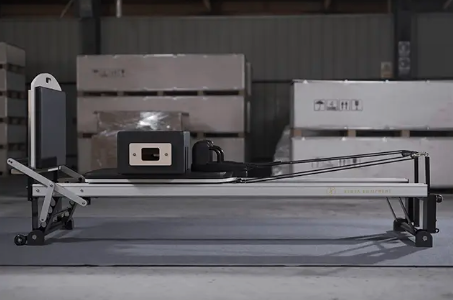
● A commercial Pilates reformer is commonly 2,330–2,600 mm long, or about 7 feet 8 inches to 8 feet 6 inches.
● Machine length alone does not show the true operating footprint. Users, instructors, ropes, boxes, and extended movements need added clearance.
● A 10-by-4-foot clear zone offers a practical starting point for one studio reformer. More space may be needed for teaching access.
● Wooden and aluminum frames can have similar lengths. Footbar design, carriage travel, towers, and folding systems create larger differences.
● Measure doors, elevators, corridors, ceiling height, and packaging before confirming an order.
● Width matters alongside length. Reviewed studio options range from about 660 to 900 mm wide, affecting row capacity.
● Tower-equipped equipment may keep a standard floor length while reaching about two meters high.
● Request the final technical drawing. Product-page measurements can change by configuration or differ between page sections.
Across the studio-oriented machines reviewed, overall length ranges from 2,330 to 2,600 mm. That equals roughly 91.7 to 102.4 inches. In practical terms, plan for a machine slightly under eight feet to about eight and one-half feet long.
A full-size wooden studio reformer may measure about 2,330 mm long and 730 mm wide. This size supports a stable frame, an adjustable footbar, ropes, springs, and common accessories without creating the longest possible footprint.
A dedicated studio configuration may reach about 2,390 mm long, 900 mm wide, and 730 mm high. The added width matters when several units sit in one room. It can reduce class capacity faster than a small length increase.
Reviewed aluminum frames measure around 2,400–2,430 mm long. One narrower design is 660 mm wide, while a fixed-footbar version reaches 700 mm. These examples show why material does not predict dimensions by itself.
Some commercial designs extend to 2,600 mm. That adds 170–270 mm compared with many standard studio options. Across ten machines, even a 200 mm increase can require two extra meters of room length when they share the same orientation.
A tower-equipped wooden reformer can retain a 2,330 mm floor length while rising to about 2,000 mm. Foldable designs may remain near full reformer length during use, even though they need less storage space afterward.
Type | Approximate length | Other planning dimension |
Wooden studio frame | 2,330 mm | About 730 mm wide |
Commercial studio frame | 2,390 mm | About 900 mm wide |
Aluminum frame | 2,400 mm | About 660 mm wide |
Fixed-footbar aluminum frame | 2,430 mm | About 700 mm wide |
Extra-long commercial frame | 2,600 mm | About 1,050 mm high |
Reformer with tower | 2,330 mm | About 2,000 mm high |
Tip: Multiply every extra 100 mm by your planned machine count before approving a floor plan.
The listed dimension measures the frame, not the complete training area. A client may extend beyond the carriage during leg, arm, kneeling, or standing work. Accessories also need temporary space beside the machine.
Leave clear space near the footbar and rope end. It supports safer entry, equipment adjustments, and exercises extending beyond the rails. A reformer should not touch a wall simply because its frame fits.
Instructors need room to observe alignment, adjust springs, and assist transitions. Narrow gaps may work on paper but create awkward teaching positions. They can also slow class changes between exercises.
For one commercial studio reformer, the manufacturer recommends a clear operating area around 10 feet long and 4 feet wide, plus instructor space. Treat this as a planning baseline, not a substitute for local safety rules. e full operating zone with tape before ordering, then test real walking paths.
Longer rails can provide more travel for taller users and exercises requiring wider extension. One studio design states support for users from about 5 feet to 6 feet 5 inches. Still, overall length should not replace a carriage-travel measurement. Pulley, and Rope Design
Footbars may sit inside or beyond the main frame line. Pulley risers and rope systems also change exterior dimensions. Two machines can offer similar exercise ranges while using different amounts of floor space.
Sitting boxes, jump boards, straps, and loops may be included, but they need storage when unused. A tower expands exercise options vertically. It may reduce the need for separate equipment, yet it adds ceiling and side-clearance requirements.
Wooden and aluminum options both sit near the eight-foot range. The reviewed wooden frame measures 2,330 mm, while several aluminum versions measure 2,390–2,430 mm. Frame geometry creates more difference than material alone. Reformer vs. Reformer With Tower
A tower may not lengthen the base. However, it can raise total height to about two meters. Check ceiling fixtures, spring movement, and raised limbs before selecting a tower setup. Foldable Commercial Reformer
A foldable reformer saves storage space after training. It still needs nearly its full open length during use. Confirm open, folded, and packaged measurements separately because each figure answers a different planning question. sure Your Studio Before Buying
Record clear wall-to-wall space after excluding columns, cabinets, radiators, reception furniture, and door swings. Then mark equipment rectangles and operating zones separately. This prevents decorative floor area from being mistaken for usable class space.
Compare parallel, staggered, and perimeter layouts. Parallel rows simplify instruction, while staggered units may improve sight lines. Keep consistent aisles so clients and instructors do not weave around footbars or accessories.
Measure entrance doors, elevators, stair landings, corridor turns, and loading areas. Packaged dimensions can exceed installed width or height. A machine that fits the studio may still fail to pass through the building.
Tower models require vertical planning. Include the tower frame, overhead fixtures, spring attachment points, and a user’s raised arms or legs. Do not rely only on the machine’s listed height.
Start near the lower end of the commercial range. A 2,330–2,400 mm frame can preserve valuable aisle space. Foldable options may help when the same room supports several activities.
Standardize dimensions across the room. Matching frames simplify spacing, cleaning, instruction, and accessory storage. A mixed fleet can create uneven aisles and reduce the number of practical teaching positions.
Prioritize usable carriage travel, adjustment range, and stable support. A longer machine may help, but only when its working dimensions match your client profile and class method.
Customization can support unusual rooms, brand colors, upholstery choices, logos, or reinforced structures. Size, structural, appearance, and branding options may be available. Any length change should preserve stability and smooth carriage performance. one approved specification sheet covering dimensions, accessories, packaging, and warranty terms.
Commercial describes intended use and durability, not one universal measurement. The reviewed equipment spans 2,330–2,600 mm. Always compare exact assembled dimensions.
A tight frame fit does not guarantee a usable station. Add movement clearance, instructor access, entry space, and accessory storage before calculating room capacity.
Width can range from about 660 to 900 mm among reviewed studio options. Tower height may reach about 2,000 mm. These dimensions strongly affect rows, aisles, and ceiling suitability. Final Specification Verification
One foldable product page displays different dimensions in separate sections. Configurations can also change over time. Request a final drawing and written confirmation before production or shipment. Pilates Reformer Size Checklist
Confirm overall length, width, height, carriage travel, footbar projection, pulley position, tower height, and folded size. Note whether dimensions include removable accessories.
Confirm operating clearance, instructor aisles, door swings, ceiling height, storage, electrical fixtures, entrances, elevators, corridors, and loading access.
Ask which measurement represents the assembled unit. Confirm packaging size, installation needs, customization limits, included accessories, warranty coverage, and replacement-parts support. Published service information includes customization and a three-year product warranty for covered quality issues.
A commercial reformer usually measures 2.33–2.60 meters long. Its operating zone matters more than frame length alone. Senya offers wood, aluminum, foldable, and tower options. They provide smooth movement, adjustable resistance, customization, accessories, and service support. Confirm final dimensions before ordering, then plan safe teaching clearance.
A: A commercial Pilates reformer is usually 2.33–2.60 meters long.
A: Allow each commercial Pilates reformer a 10-by-4-foot starting zone.
A: A commercial Pilates reformer varies through rails, footbars, towers, and folding systems.
A: Larger frames may increase material and shipping costs.
A: No. Choose one based on height, carriage travel, and room size.
A: Increase the front, rear, and side clearance.


