Views: 0 Author: Site Editor Publish Time: 2025-10-22 Origin: Site


Pilates equipment leather surfaces are integral to the functionality and longevity of Pilates apparatus. Whether it is PU Pilates equipment leather or synthetic Pilates equipment leather, maintaining these surfaces is crucial for ensuring durability and hygiene. This article delves into the best practices for cleaning and maintaining Pilates equipment leather surfaces, providing insights into the types of leather used, cleaning techniques, and the importance of regular maintenance. For more information on Pilates equipment leather, you can visit our sitemap.
Pilates equipment leather surfaces vary widely, with options including natural leather, PU leather, and synthetic leather. Each type has its unique characteristics and maintenance requirements. Natural leather is known for its luxurious feel and durability, while PU and synthetic leathers offer cost-effective and versatile alternatives. These materials are often chosen for their anti-bacterial properties and high resilience, making them ideal for fitness environments.
Durable Pilates equipment leather is designed to withstand frequent use and exposure to sweat and oils. This durability is enhanced by reinforced stitching and seamless surface designs, which prevent wear and tear. Understanding the type of leather used in your equipment is the first step in developing an effective cleaning and maintenance routine.
The primary types of leather used in Pilates equipment include:
Natural Pilates Equipment Leather: Known for its breathability and comfort, natural leather requires regular conditioning to maintain its suppleness and prevent cracking.
PU Pilates Equipment Leather: A synthetic alternative that mimics the appearance of natural leather, PU leather is water-resistant and easier to clean.
Synthetic Pilates Equipment Leather: Made from plastic-based materials, synthetic leather is highly durable and often treated to be anti-bacterial, making it a hygienic choice for Pilates equipment.
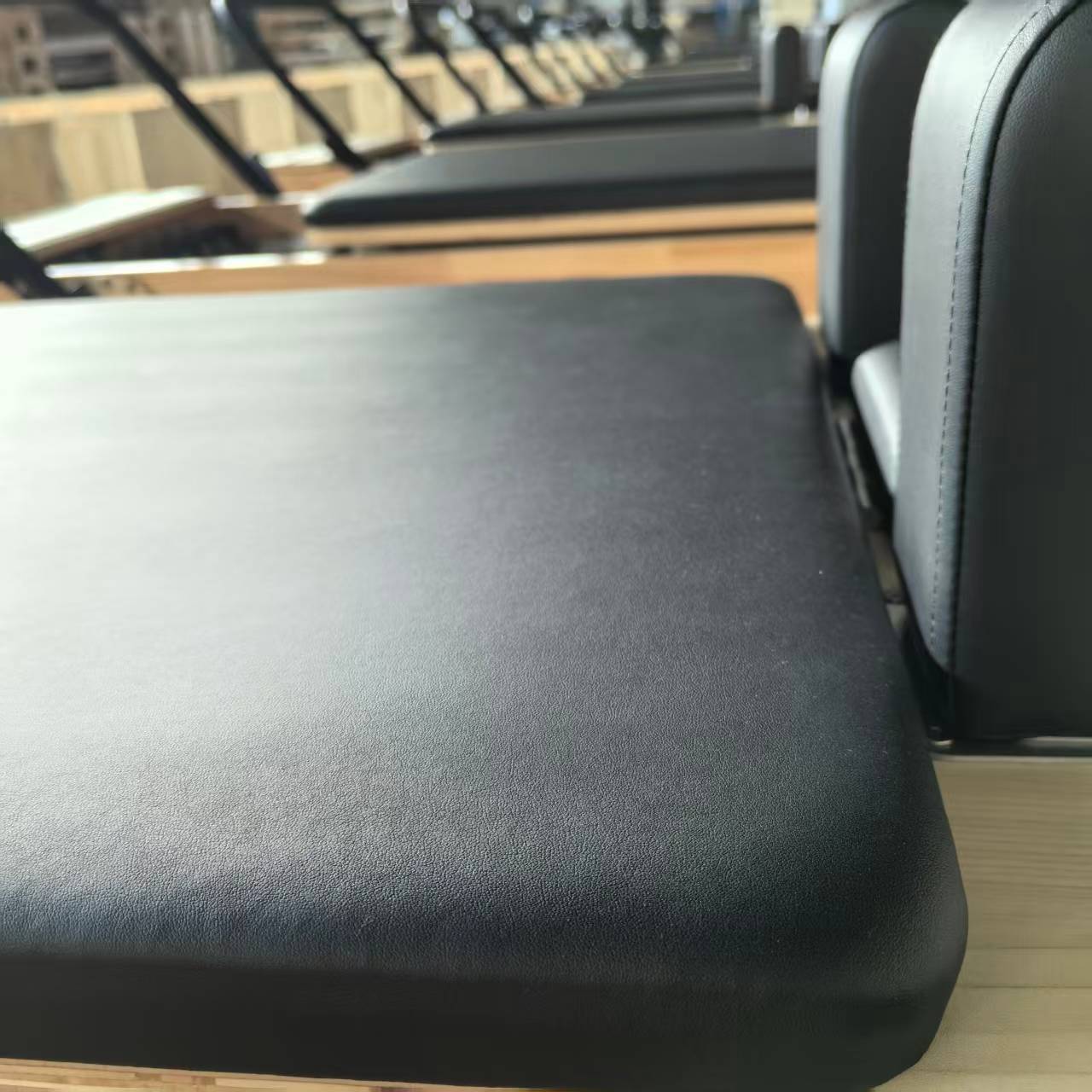
Proper cleaning of Pilates equipment leather surfaces is essential to maintain their appearance and functionality. The cleaning process varies depending on the type of leather, but general guidelines can be followed to ensure effective maintenance.
For all types of Pilates equipment leather, regular dusting with a soft cloth is recommended to remove surface dirt and debris. For deeper cleaning, a mild soap solution can be used. It is important to avoid harsh chemicals that can damage the leather. After cleaning, the surface should be wiped with a damp cloth to remove any soap residue, followed by drying with a soft towel.
For natural leather, conditioning is crucial to prevent drying and cracking. A leather conditioner should be applied every few months to maintain the leather's natural oils. PU and synthetic leathers, being more resistant to moisture, can be cleaned with a slightly damp cloth and do not require conditioning.
Regular maintenance of durable pilates equipment leather surfaces extends their lifespan and ensures a hygienic workout environment. It prevents the buildup of sweat and oils, which can lead to deterioration and unpleasant odors. Anti-bacterial Pilates equipment leather is particularly beneficial in preventing the growth of bacteria and fungi, contributing to a healthier fitness space.
Implementing preventive measures can significantly reduce the need for intensive cleaning. These measures include using towels during workouts to absorb sweat, ensuring proper ventilation in the workout area, and storing equipment in a dry environment. These practices help maintain the integrity of the leather surfaces and reduce the frequency of deep cleaning sessions.
Maintaining anti-bacterial Pilates equipment leather surfaces is essential for ensuring their durability and hygiene. By understanding the types of leather used and following appropriate cleaning and maintenance practices, you can extend the lifespan of your equipment and create a safe and pleasant workout environment. For more insights on maintaining Pilates equipment leather surfaces, you can refer to our detailed guide.
1. What is the best way to clean natural Pilates equipment leather?
Regular dusting and conditioning with a leather conditioner are recommended to maintain the suppleness and prevent cracking of natural leather.
2. How often should I clean PU Pilates equipment leather?
PU leather should be cleaned regularly with a damp cloth to remove sweat and oils, but it does not require conditioning like natural leather.
3. Can synthetic Pilates equipment leather be damaged by water?
Synthetic leather is water-resistant, making it less susceptible to water damage compared to natural leather.
4. Why is anti-bacterial Pilates equipment leather important?
Anti-bacterial leather helps prevent the growth of bacteria and fungi, ensuring a hygienic workout environment.
5. What preventive measures can I take to maintain my Pilates equipment leather?
Using towels during workouts, ensuring proper ventilation, and storing equipment in a dry environment are effective preventive measures.
6. How can I extend the lifespan of my Pilates equipment leather?
Regular cleaning, conditioning (for natural leather), and implementing preventive measures can significantly extend the lifespan of Pilates equipment leather.
7. Is it necessary to use a specific cleaner for Pilates equipment leather?
Using a mild soap solution is generally sufficient for cleaning, but it is important to avoid harsh chemicals that can damage the leather.


