Views: 0 Author: Site Editor Publish Time: 2026-09-30 Origin: Site


Purchasing studio equipment stands as a primary capital expenditure for modern fitness businesses. It directly impacts your studio revenue, floor plan efficiency, and overall service offerings. Equipment decisions shape how clients experience your brand from their very first visit. Studio owners often struggle to choose between the scalability of hybrid machines and the premium, specialized appeal of traditional full-trapeze tables. Finding the right balance between versatile group setups and elite one-on-one stations requires careful planning. This guide provides a business-first evaluation framework to help owners and clinical buyers navigate their options. You will learn how to decide between a reformer with tower vs Cadillac based on spatial economy, target demographics, and return on investment. We break down mechanical differences, clinical benefits, and staffing considerations. By the end, you will confidently align your hardware investments with your long-term business goals.
You cannot make sound purchasing decisions without understanding the foundational mechanics. Each apparatus solves distinct problems for studio owners. Knowing these structural realities establishes a baseline for your daily operations.
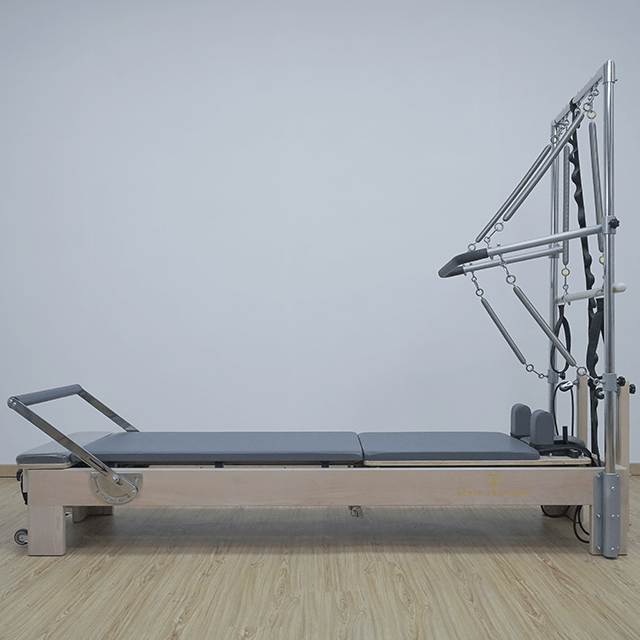
This apparatus merges two classical pieces of equipment into one footprint. It combines a moving reformer carriage with a vertical half-trapeze frame mounted at one end. This setup provides incredible versatility. Instructors can program carriage-based resistance exercises and seamlessly shift into static-spring tower work.
The primary advantage lies in workflow efficiency. Clients transition smoothly between seated, supine, and standing exercises without changing stations. You avoid the chaos of moving bodies across the room during a tight 50-minute class window.
A standard reformer with tower thrives in multi-use studio floors. Adaptability is highly prioritized in these environments. You get the classic pulling mechanics of the carriage alongside the open-chain spring work of the tower frame. It acts as the hybrid engine driving high-volume fitness businesses.
The trapeze table operates on an entirely different philosophy. It features a static, elevated upholstered bed surrounded by a complete metal canopy. This structure supports push-through bars, roll-down bars, arm springs, leg springs, and hanging fuzzies.
The primary advantage here is ultimate stability combined with full-body suspension capabilities. You navigate zero moving carriage parts. This stationary bed provides a highly secure base for clients dealing with mobility limitations. They can push, pull, and hang from an immovable foundation.
A Pilates Cadillac targets dedicated private rooms. Clinical physical therapy spaces and premium VIP studio corners also benefit immensely from its presence. The towering metal frame acts as a visual anchor in any high-end fitness space.
Studio profitability often comes down to footprint math. You must evaluate how much space a machine consumes versus how much revenue it generates per hour.
Apparatus Spatial and Capacity Comparison
| Equipment Type | Average Dimensions | Operational Clearance Required | Ideal Capacity Model |
|---|---|---|---|
| Reformer with Tower | 90” L x 26” W | Front and rear end clearance. Side clearance can be tighter. | Group Classes (4-12 units) |
| Pilates Cadillac | 85” L x 28” W | Full 360-degree instructor access. High ceilings required. | Privates/Duets (1-3 units) |
A typical hybrid tower unit measures approximately 90 inches long by 26 inches wide. A full trapeze table measures about 85 inches long by 28 inches wide. While their physical bases seem similar in size, their operational footprints differ drastically. A Cadillac requires 360-degree instructor access to safely spot suspension exercises. You must also account for significant ceiling clearance.
Tower units allow for high-capacity group programming. You can confidently line up multiple units side-by-side. Let us model the revenue difference in a 500-square-foot room. You can comfortably fit eight tower units in this space. Eight clients paying standard group rates can generate substantial hourly revenue. In that same exact footprint, you might max out at three or four Cadillacs due to the required spotting zones and structural bulk.
However, the trapeze table justifies premium pricing models. It commands higher price points for private sessions or specialized duets. The impressive canopy structure creates a psychological "statement piece" effect. High-net-worth individuals and clinical clientele often perceive this machine as elite. They willingly pay premium rates for exclusive access to advanced suspension work.
Your hardware must serve your target audience. Different demographics seek entirely different outcomes from their movement practices.
General fitness clients usually seek variety. They want core strength, dynamic movement, and fast-paced class environments. The hybrid machine supports this demographic beautifully.
You can program cardiovascular jump board sequences on the carriage. Minutes later, clients can grab the tower springs for heavy upper-body resistance. This versatility supports dynamic flow sequences. Group fitness thrives on continuous movement. Instructors can keep heart rates elevated because clients rarely need to step off the machine. They simply swap springs or adjust the push-through bar.
Athletic conditioning clients also appreciate the unstable nature of the moving carriage. It forces deep core engagement during standing lunges and planks. The tower attachment simply adds a stable vertical anchor for deep stretching after an intense athletic flow.
Clinical populations have stricter safety requirements. Stroke recovery patients, seniors, and clients with spinal injuries need maximum stability. The full trapeze table becomes an absolute necessity for physical therapy.
The static bed height makes mounts and dismounts incredibly easy. Seniors do not have to lower themselves close to the floor. Rehab clients do not have to worry about a carriage sliding away underneath them as they sit down. It provides a highly secure, predictable surface.
Furthermore, this apparatus offers capabilities you cannot safely replicate elsewhere. Full hanging exercises decompress the spine effectively. Isolated asymmetrical spring work allows therapists to treat severe muscular imbalances safely. Advanced clients also utilize the upper canopy for acrobatic suspension techniques. You simply cannot execute these maneuvers on a moving track.
Implementing large commercial equipment introduces logistical hurdles. You need transparency regarding upfront costs, spatial setup, and ongoing daily upkeep.
Let us look at upfront hardware costs. Tower units generally run lower per unit than a commercial-grade trapeze table. When outfitting a group room, bulk purchasing hybrid machines often aligns better with standard business loan limits. The heavy metal canopy and specialized upholstery of the full trapeze table elevate its single-unit price considerably.
Installation poses unique environmental constraints. Standard studio ceilings work fine for group machines. However, a full trapeze canopy typically requires a minimum 8.5 to 9-foot ceiling for safe suspension. You must ensure tall clients will not hit the ceiling while hanging from the upper bars. If your commercial space lacks this height, wall-mounted tower setups often serve as a viable, lower-profile alternative.
Long-term maintenance duties vary significantly between the two options.
Your equipment is only as profitable as the staff operating it. Studio owners frequently overlook the operational bottlenecks associated with hiring.
Finding qualified instructors directly impacts your schedule. It is generally easier to find instructors certified for group carriage and tower classes. Most comprehensive programs introduce these modules early on. Instructors feel very comfortable guiding eight people through a standard flow.
Conversely, finding advanced instructors fully certified on the complete trapeze table takes effort. Comprehensive certification programs require hundreds of observation and practice hours for this specific apparatus. The talent pool is much smaller.
Safety and liability heavily dictate staffing requirements. Teaching hanging or suspension exercises carries inherent risk factors. A client slipping from the upper canopy can result in severe injury. You absolutely need highly experienced staff to spot clients during advanced maneuvers. Newer instructors should stick to fundamental bed-level exercises until they gain hands-on spotting confidence.
To mitigate adoption risks, introduce your equipment strategically. Phase new apparatus into your studio schedule using a structured onboarding plan.
Taking a phased approach ensures instructors can comfortably program for the specific apparatus without feeling overwhelmed. Confident teachers deliver better client experiences, which drives higher retention rates.
Deciding between these two incredible pieces of equipment comes down to matching mechanics with your specific business goals.
If your business model relies on recurring group class memberships, shortlist the hybrid tower unit. It provides the perfect blend of dynamic movement, quick transitions, and scalable revenue. It fits seamlessly into modern, fast-paced fitness environments.
If you operate a physical therapy clinic, premium bespoke studio, or 1-on-1 holistic movement center, shortlist the full trapeze table. It anchors your high-ticket private sessions. The unmatched stability and advanced suspension features justify premium pricing and serve clinical populations safely.
For your next steps, strictly audit your current floor plan and ceiling heights. Consult your lead instructors regarding their programming intent and current certification levels. Finally, request commercial pricing sheets for both options so you can accurately forecast your upfront capital requirements.
A: Yes. Reformer/Trapeze Combinations (combo units) exist. They offer the full upper canopy positioned over a moving carriage track. However, converting them between modes takes physical effort and time. This makes them excellent for private sessions but highly impractical for fast-paced group class transitions.
A: Absolutely. Standard industry recommendations mandate a minimum ceiling height of 8.5 to 10 feet. This specific clearance guarantees safe hanging and suspension exercises. Without it, tall clients risk striking the ceiling, causing potential head and neck injuries.
A: It depends on the beginner's mobility. The trapeze table provides unmatched stability for nervous, low-mobility, or elderly clients because the bed never moves. However, the guided track resistance of a moving carriage offers excellent, intuitive feedback for able-bodied beginners learning core control.
A: They differ slightly. While both utilize arm and leg springs, the trapeze table features longer springs designed specifically for overhead canopy attachments. Tension grades and exact placement hooks vary between the two machines to accommodate either vertical frame work or full-bed suspension angles.


