Views: 0 Author: Site Editor Publish Time: 2026-10-07 Origin: Site


Moving from general Pilates interest to active equipment procurement requires a major focus shift. You quickly realize most chairs look nearly identical on the surface. However, the underlying engineering dictates clinical efficacy, studio longevity, and user safety.
Poorly spec'd chairs often lead to pedal wobble and uneven spring tension. You will also experience rapid upholstery degradation over time. These hardware failures disrupt client flow and introduce potential liability issues. You risk halting operations completely when equipment cannot safely support dynamic, weight-bearing movements.
We want to strip away flashy marketing claims entirely. This guide provides a hard-skills breakdown of the Pilates Wunda chair specifications you actually need. You will learn what matters for commercial, clinical, and advanced home use. We will explore how frame density, spring dynamics, and pedal architecture separate reliable equipment from fragile alternatives.
Business Success Criteria directly link equipment durability to reduced maintenance downtime. High utilization rates depend heavily on reliable gear. Instructors need chairs ready for back-to-back sessions every single day. Weak joints or failing springs sideline the apparatus instantly. You lose class capacity when clients cannot book a broken station. Reliable hardware keeps classes running smoothly and consistently.
Clients notice when equipment feels unstable or cheap. They appreciate sturdy, professional gear during their workouts. High-quality apparatus elevates your brand reputation naturally. It encourages client retention and positive word-of-mouth referrals.
Biomechanical Impact matters deeply for client progression. Precise resistance allows instructors to challenge clients safely. Stable dimensions support advanced repertoire perfectly. You can guide users through complex pikes or pull-ups without fear. If a chair wobbles, clients lose confidence immediately. A rigid base ensures muscle isolation remains the primary focus. Instructors rely on consistent feedback from the apparatus to correct form.
Risk Mitigation requires evaluating hardware tolerances over aesthetic appeal. A beautifully polished finish means nothing if locking pins slip. You must analyze the structural engineering deeply. Failing to do so exposes your practice to unnecessary risks. Safe equipment builds client trust and protects your business from liability. Proper specs ensure long-term peace of mind for everyone.
Traditional Wood Frames utilize maple, oak, or beech. They offer a highly sought-after classic aesthetic. They dampen sound effectively during movement. Wood frames generally weigh less than metal counterparts. This lighter weight makes studio reconfiguration much easier for instructors. You can move them around the room quickly.
Evaluation Criteria for wood demands strict attention to detail. Always look for kiln-dried hardwoods. Manufacturers should use robust mortise-and-tenon or dowel joints. Avoid softwoods entirely. Never accept MDF core veneers. They warp under heavy loads rapidly. Moisture changes ruin cheap wood composites over time.
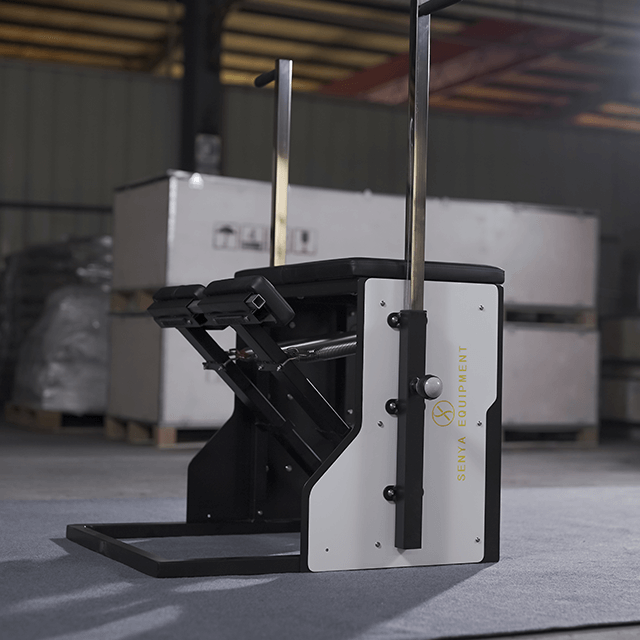
A modern steel Pilates Wunda chair provides maximum durability. It supports significantly higher weight capacities effortlessly. Engineers can create narrower profiles for tight spaces. They achieve this without sacrificing any structural strength. Metal frames endure brutal daily use in busy environments.
Evaluation Criteria for steel focuses on finishing and bonding. Assess the powder-coating quality carefully. High-grade coating prevents rust in humid environments. Inspect the weld cleanliness closely. Smooth, continuous welds indicate superior manufacturing standards. These models are ideal for high-traffic, multi-user spaces where durability is paramount.
Base Stability requires analyzing the footprint-to-height ratio. The chair must resist tipping completely. Dynamic lateral movements place immense stress on the base. Off-center load bearing should never cause the apparatus to lift. You need a wide enough base to anchor aggressive movements. Uneven studio floors cause instability, so adjustable rubber feet help compensate for this issue.
| Feature | Traditional Wood Frame | Steel Frame |
|---|---|---|
| Weight Capacity | Moderate to High | Maximum |
| Aesthetic Appeal | Classic, warm, natural | Modern, industrial, sleek |
| Corrosion Resistance | High (requires proper sealing) | Depends entirely on powder-coating |
| Studio Mobility | Easier to move and rearrange | Heavier, usually kept stationary |
Single vs. Split Pedal Systems dictate exercise variety completely. We strongly recommend split-pedal designs for modern procurement. They offer unmatched versatility for unilateral rehabilitation. You can isolate right and left limbs easily. Rehab clients often suffer from strength imbalances. Split pedals allow you to identify these weaknesses quickly. You can tailor resistance for each leg independently.
Converting a split pedal to a single pedal requires hardware precision. You need a rigid locking dowel. This mechanism must feature low-tolerance engineering. You want zero "play" or clicking during use. A sloppy dowel ruins the user experience entirely. Secure locking ensures safety during heavy, two-legged compressions.
Spring Count and Tension Options require careful consideration for programming. Two-spring versus four-spring systems change your approach. Four-spring systems represent the industry standard today. They typically include two heavy and two light springs. This setup enables precise load tuning. You can scale resistance for varying body weights seamlessly.
Evaluating Spring Quality prevents premature equipment failure. Look for nickel-plated carbon steel components. Music wire springs also resist early deformation excellently. Cheap springs lose their tension memory quickly. They create uneven resistance curves during exercises. High-quality metal retains its bounce for years of heavy use.
Mounting Systems impact class flow significantly. Compare traditional eye-hooks to stepped "cactus" systems. Eye-hooks use a simple mechanism. However, they cause slower transitions between exercises. Stepped "cactus" systems allow rapid transitions. Instructors can change spring tension in seconds. This speed proves critical for fast-paced group classes where momentum matters.
Seat Dimensions impact user biomechanics directly. Standard heights range from 21 to 24 inches. Assess how this height impacts hip and knee angles. Seated footwork requires specific pelvic alignments. Consider your primary clientele carefully. Rehab patients might need different angles than athletic clients. Taller chairs accommodate taller users better.
Handle and Cane Engineering dictates upper body safety during suspension. Locking Mechanisms remain strictly non-negotiable. You must choose twist-lock or threaded-pin systems. Push-button pins often develop a dangerous wobble over time. You cannot risk handle failure. Full bodyweight suspension requires absolute rigidity from the apparatus.
Height Adjustability must accommodate varying user heights smoothly. Specific exercises require different structural settings.
Floor Space Economics determine your studio layout efficiency. Define the actual operational footprint needed. Do not just measure the physical chair dimensions. You must calculate the working clearance around the apparatus. Instructors need space to spot clients safely. You should leave at least three feet of clearance around the chair. This buffer zone prevents accidental collisions during expansive movements.
Foam Specifications dictate client comfort heavily. Require high-density EVA foam for the seat. Low-density foam bottoms out easily during kneeling exercises. This exposes the user to the hard baseboard underneath. Painful knees disrupt the client's focus immediately. Quality foam rebounds quickly after heavy compression.
Vinyl and Upholstery Standards ensure clinical hygiene. Look exclusively for marine-grade vinyl materials. It must feature antimicrobial properties naturally. Studios breed bacteria rapidly through sweat. Easy sanitation remains crucial for public health. Harsh chemical cleaners degrade standard vinyl quickly. Marine-grade materials withstand daily sanitization protocols much better.
The grip factor demands equal attention. The surface must provide high friction always. Clients sweat heavily during high-intensity sessions. A slippery seat causes accidents instantly. It compromises proper structural form. Matte finishes usually offer better traction than glossy ones.
Hinge and Hardware Wear reveal true manufacturing quality. Evaluate the pedal hinge meticulously. Piano hinges offer decent durability for lighter home use. Heavy-duty industrial pivots represent the highest trustworthiness. Seek out self-lubricating bearings specifically. They ensure silent operation continuously. You want long-term reliability for commercial spaces without constant squeaking.
Clinical and Rehab Settings require highly specific features. You should prioritize granular spring tension above all. Look for systems offering four or more springs. Split-pedal capability remains essential for isolated muscle testing. Demand maximum handle stability. Patients experiencing balance issues rely heavily on this solid support.
Group Reformer and Pilates Studios face different daily demands. Prioritize rapid spring transition systems like the cactus mount. Easy-clean marine vinyl saves turnaround time between classes. Robust frames endure heavy daily rotation. A thorough Pilates Wunda chair specifications review is critical here. It ensures equipment longevity matches your other heavy-duty apparatus.
Next-Step Actions require methodical execution. Follow these procurement steps before finalizing your purchase:
Evaluating equipment specifications is ultimately an exercise in proactive risk management. It dictates your functional planning and daily operations entirely. Hard engineering facts always outweigh aesthetic preferences in professional settings.
We advise buyers to prioritize hinge hardware over brand names. Focus intensely on spring quality and frame material density. Demand technical specification sheets from manufacturers directly. Do not rely on flashy promotional brochures. Make your purchase based on verified engineering data.
Audit your current studio space today. Measure your available footprint accurately. Cross-reference your findings against the dimensions and clearance requirements discussed. This proactive step guarantees a successful integration of your new apparatus.
A: A commercial chair should support a minimum of 300 lbs safely. You must look for rigorous structural testing data from the manufacturer. Heavy-duty hardware tolerances ensure stability during dynamic, full-bodyweight exercises. This capacity prevents long-term frame warping under repetitive stress.
A: You should replace springs every 18 to 24 months commercially. This timeline depends heavily on daily usage hours. Regular inspections prevent sudden tension loss or breakage. Replacing springs on schedule ensures consistent, safe resistance for every client.
A: Usually, you cannot upgrade a single-pedal chair later. The fundamental chassis and hinge mechanism differ entirely between designs. Hardware realities make post-purchase conversion virtually impossible. You must choose your pedal architecture during the initial purchase.
A: A well-manufactured steel model resists rust effectively. Manufacturers use high-grade powder coating to seal the metal from moisture. Humid studio environments require this specific protection. You must wipe down the frame daily to maintain the finish and prevent corrosion.


